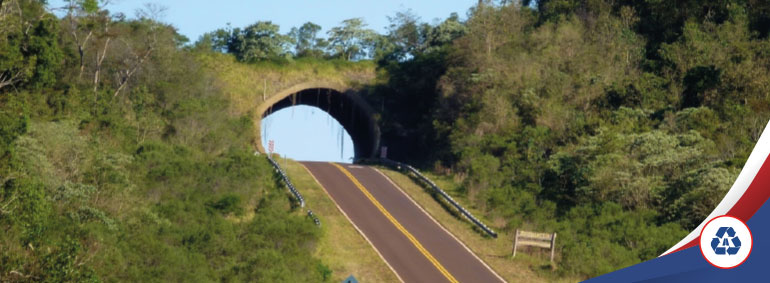
The concept of Sustainable Construction has been developed in recent times, with particular emphasis, as a way to meet current and future infrastructure needs, using best practices that allow minimizing negative impacts on the environment and consumption of resources. This planning includes all stages of the life cycle of a project, both in terms of design and construction, as well as in service life and the construction instance.
Likewise, climate change poses a global challenge and an opportunity for the development of a road infrastructure with a lower carbon footprint, adapted to the expected effects of climate change and resilience. Faced with such challenges, efforts are undoubtedly necessary in the field of technical study, planning and technological innovation in solutions that meet the above objectives.
» THE AREA TOPICS INCLUDE, BUT ARE NOT LIMITED TO:
• Solutions and innovation for sustainable transport
• Reduction of environmental impact
• Environmental management systems applied to road infrastructure construction processes
• Scenarios on climate change and its possible impacts on road infrastructure
• National and provincial inventories of greenhouse gases in the road sector
• Public and sectorial strategies for mitigating greenhouse gas emissions associated with road transport
• Public and sectorial strategies for the adaptation of road infrastructure for the purposes of climate change
• Strategies and actions in favor of a resilient road infrastructure
• Systems for measuring, reporting and verifying greenhouse gas (GHG) emissions in the road sector
• Education, research and technology transfer to face the challenges of climate change in the transport sector
• Financing for “green” projects
• Life cycle analysis applied to projects
Coordinators:
Dr. Mariana Testoni
Dr. Susana Ciccioli